
Mardi gras
Mardi Gras is New Orleans at full volume — weeks of parades, brass bands, and costumed krewes rolling through the streets before Lent begins. It's the city's oldest tradition and the best excuse you'll ever have to be in town on a Tuesday
Proximity
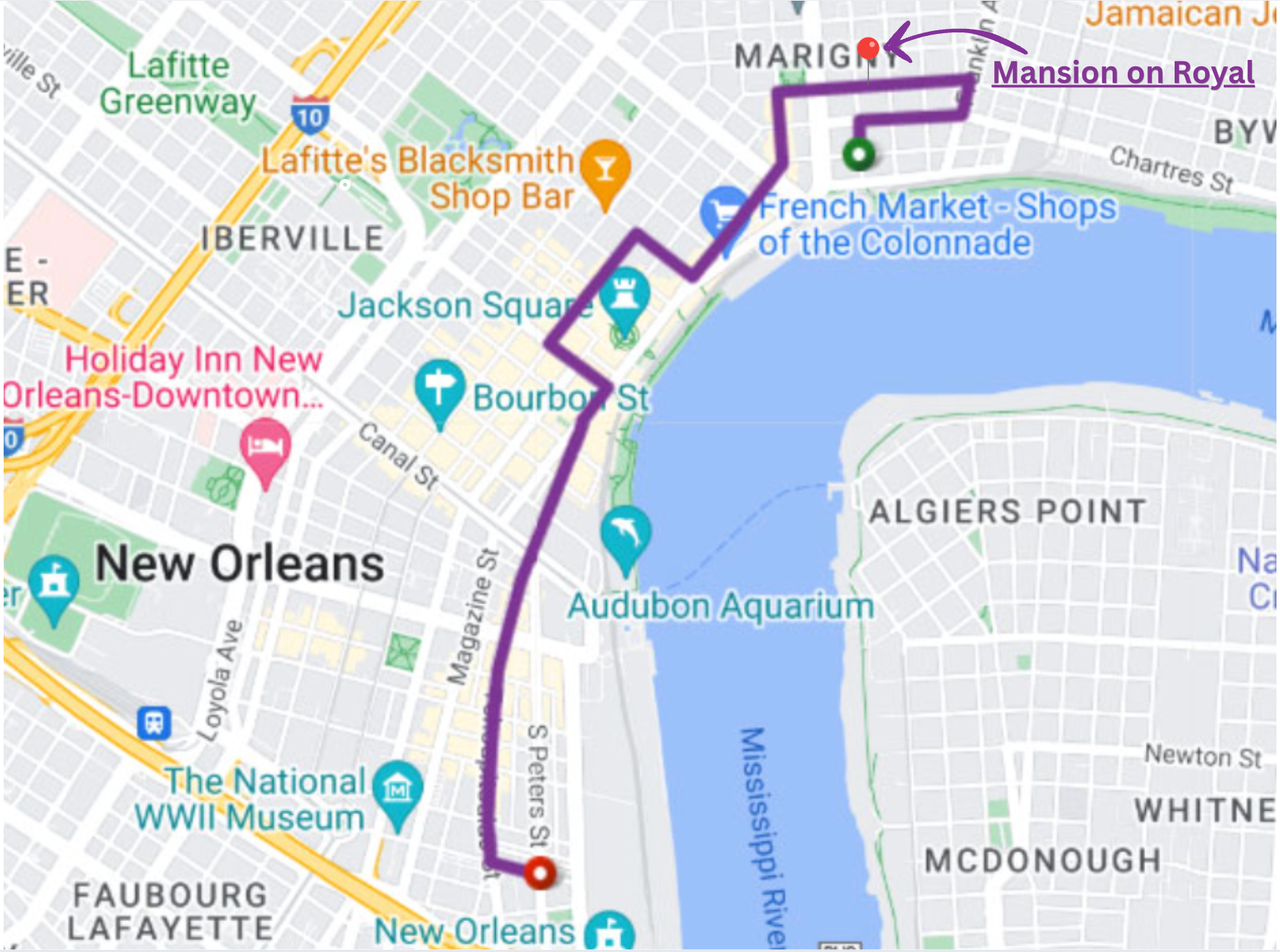
We're on the parade route. Krewe du Vieux forms up at Franklin and Royal, two blocks away, then comes down Royal right past our front door on its way into the French Quarter. It's the parade that kicks off Carnival season — mule-drawn floats, eighteen brass bands, and the whole street marching along with it. Most people fight for a spot on the curb. You'll be on our large front porch with a drink, watching the parade come to you.

History
Mardi Gras came to Louisiana with the French in 1699, when Iberville named a bend in the river Pointe du Mardi Gras and threw a party. For a century it stayed indoors — masked balls, private dinners — until 1837, when the first parade rolled through the streets. The Mistick Krewe of Comus followed in 1857 with floats and torchlight, and coined the word krewe. Rex gave it purple, green, and gold in 1872. The Mansion on Royal was already eighteen years old when that first parade went by.

The season
Mardi Gras draws over a million visitors a year, and for good reason. No other American city gives itself over to a season this completely — costumes, brass bands, king cake, and parades rolling nightly for weeks before Fat Tuesday.


